
Great Basin Rattlesnake
Crotalus oreganus Rattlesnake (pit viper)
The Great Basin rattlesnake is a pale rattlesnake of the intermountain West with irregular dark blotches on a light gray, tan or yellowish body. The blotches become crossbands toward the tail.
- Scientific name
- Crotalus oreganus
- Average length
- 2 to 4 ft (0.6 to 1.2 m)
- Rattle
- Yes
- States
- 6
Last checked:
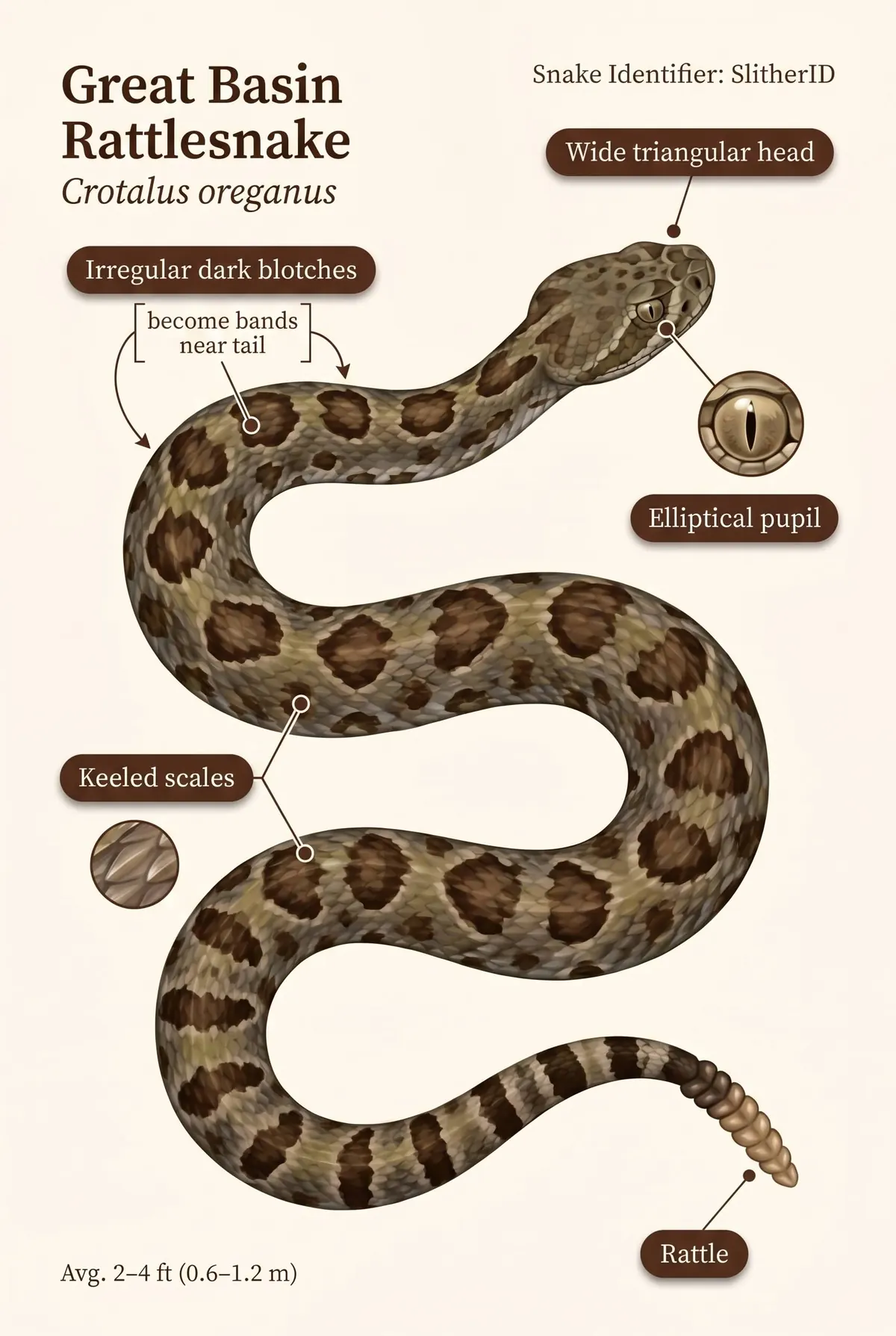
How to recognize a Great Basin Rattlesnake
- Irregular dark blotches on a pale background
- Blotches turn into bands near the tail
- Wide triangular head with elliptical pupils and heat pits
- Keeled scales and a rattle
- Usually 2 to 4 feet long
Where it lives
Nevada, Utah, southern Idaho, southeastern Oregon, eastern California and northwestern Arizona.
States: Arizona, California, Idaho, Nevada, Oregon, Utah
Habitat
Sagebrush flats, juniper woodland, rocky canyons and desert grassland.
Look-alikes and how to tell them apart
- Great Basin gopher snake: No rattle, a narrow head, round pupils and a long thin tail.
- Desert night snake: Small and slender with no rattle and a narrow head.
Babies and young snakes
Young have bold blotches and only a button on the tail.
Venom and safety
A bite can cause severe pain, swelling and bleeding problems. Get emergency care.

SlitherID identifies snakes from a photo and shows if they are venomous. For iPhone.

Questions and answers
Is the Great Basin rattlesnake a separate species?
Where does it live?
Other venomous snakes
-
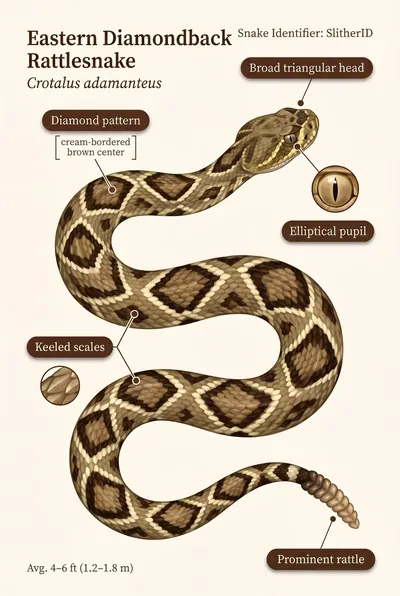 Eastern Diamondback RattlesnakeCrotalus adamanteus
-
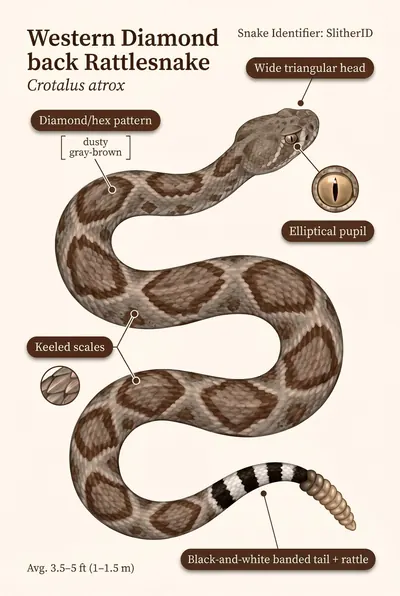 Western Diamondback RattlesnakeCrotalus atrox
-
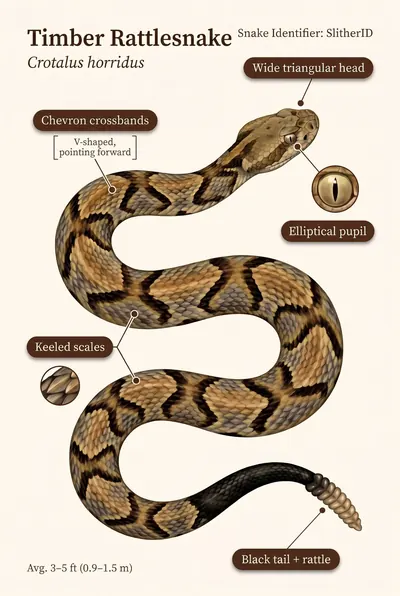 Timber RattlesnakeCrotalus horridus
-
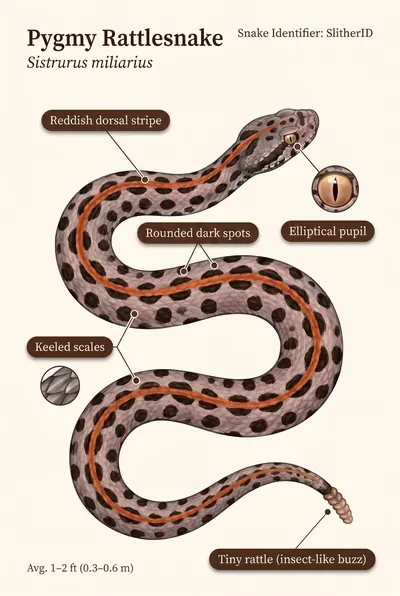 Pygmy RattlesnakeSistrurus miliarius
-
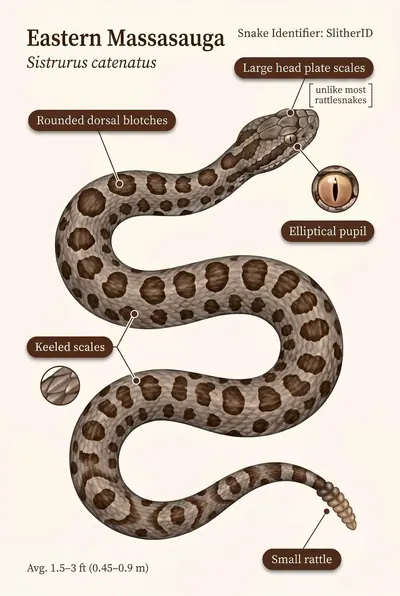 Eastern MassasaugaSistrurus catenatus
-
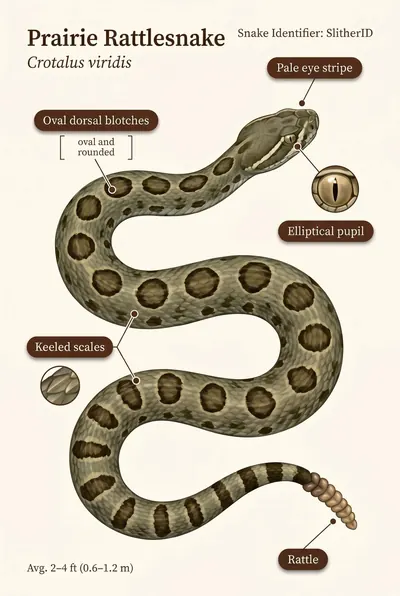 Prairie RattlesnakeCrotalus viridis
All 19 venomous snakes → · Venomous snake identification chart (US) →