
Mojave Rattlesnake
Crotalus scutulatus Rattlesnake (pit viper)
The Mojave rattlesnake is a desert rattlesnake that often has a greenish or olive tint, crisp light-edged diamonds and a tail with white bands wider than the black ones. Many populations carry venom that acts on the nervous system, which makes it one of the most dangerous snakes in the US.
- Scientific name
- Crotalus scutulatus
- Average length
- 2 to 4 ft (0.6 to 1.2 m)
- Rattle
- Yes
- States
- 6
Last checked:
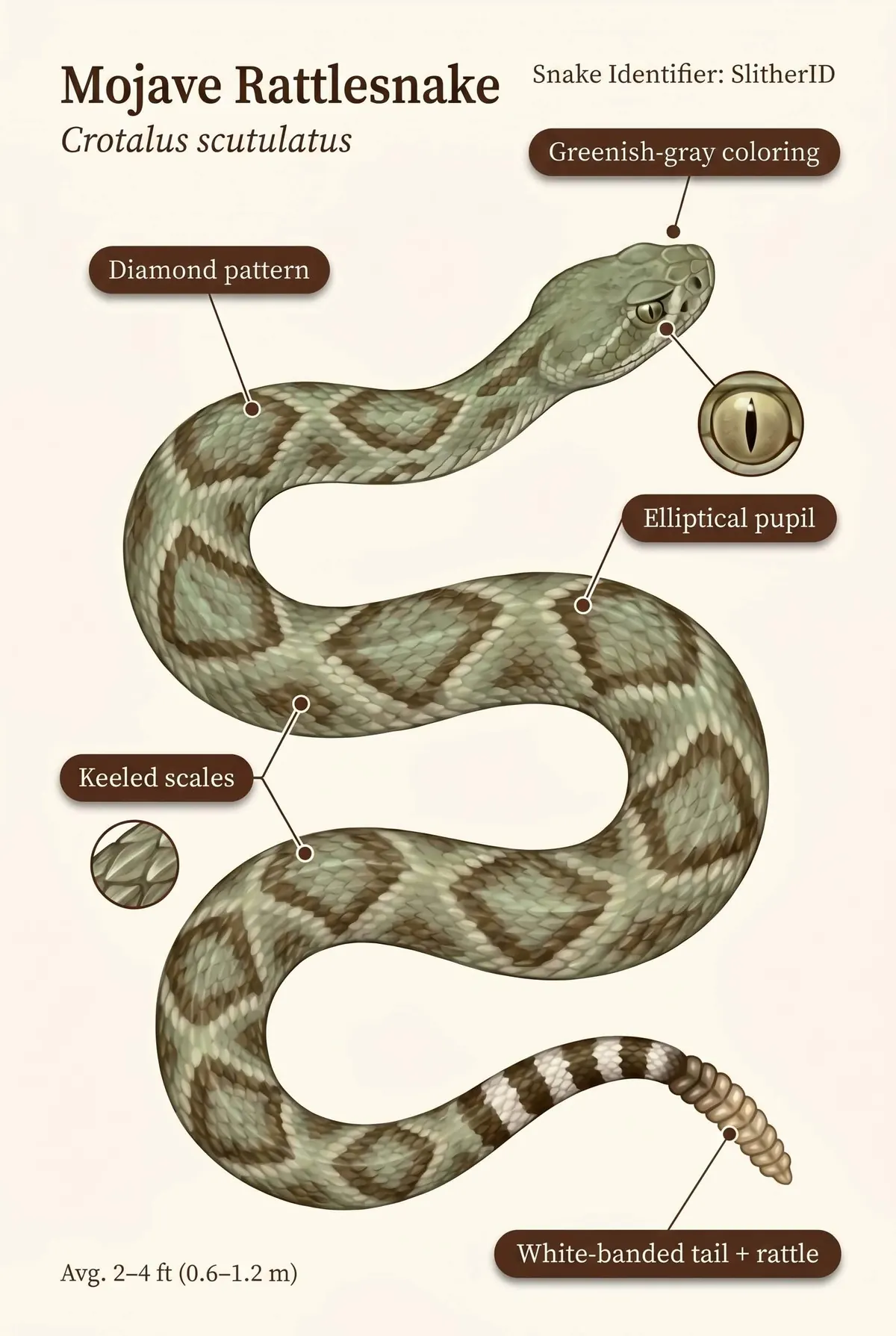
How to recognize a Mojave Rattlesnake
- Greenish-gray to olive color (some are brown)
- Crisp diamonds with light edges along the back
- Tail rings: white bands are wider than the black bands
- Elliptical pupils, heat pits, keeled scales and a rattle
- Usually 2 to 4 feet long
Where it lives
Mojave and Sonoran deserts of southeastern California, southern Nevada, southwestern Utah and Arizona, plus southwestern New Mexico and west Texas.
States: Arizona, California, Nevada, New Mexico, Texas, Utah
Habitat
Open desert flats with creosote bush and mesquite, grassland and low hills, usually away from dense rock.
Look-alikes and how to tell them apart
- Western diamondback: Black and white tail bands of similar width, fuzzier diamonds and a dustier, browner body.
- Gopher snake: No rattle, narrow head, round pupils and a long thin tail.
Babies and young snakes
Young are patterned like adults with only a button on the tail.
Venom and safety
Mojave venom can affect breathing and muscle control, and early symptoms may seem mild. Anyone bitten needs emergency care immediately.

SlitherID identifies snakes from a photo and shows if they are venomous. For iPhone.

Questions and answers
Is the Mojave rattlesnake the most venomous rattlesnake?
Why is it called the Mojave green?
Other venomous snakes
-
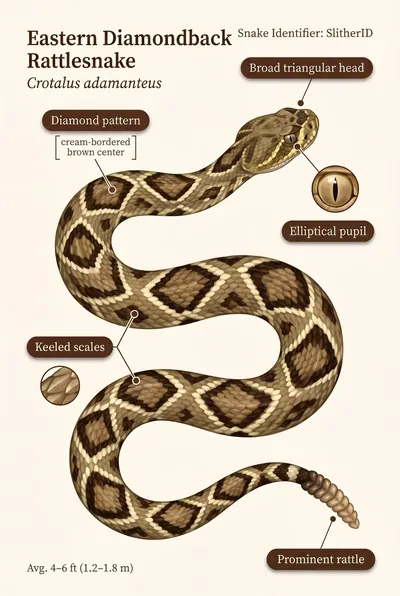 Eastern Diamondback RattlesnakeCrotalus adamanteus
-
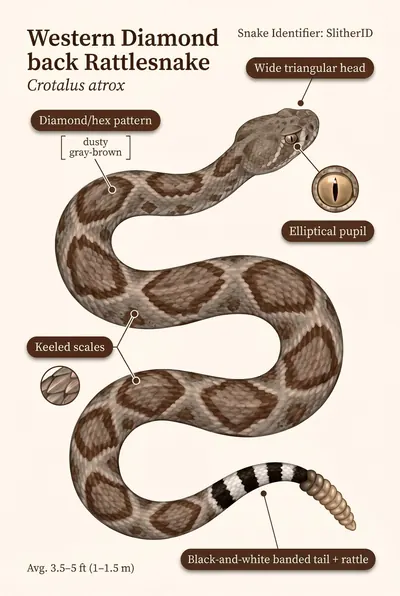 Western Diamondback RattlesnakeCrotalus atrox
-
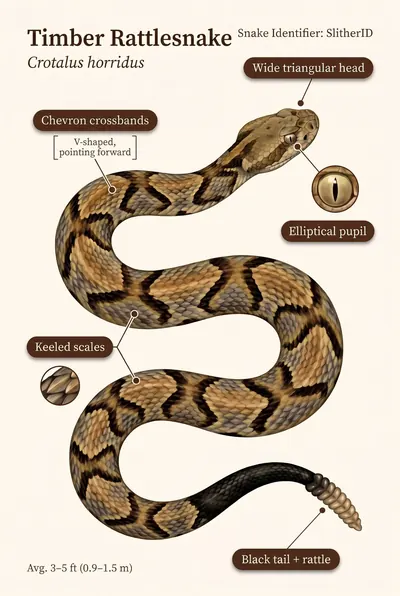 Timber RattlesnakeCrotalus horridus
-
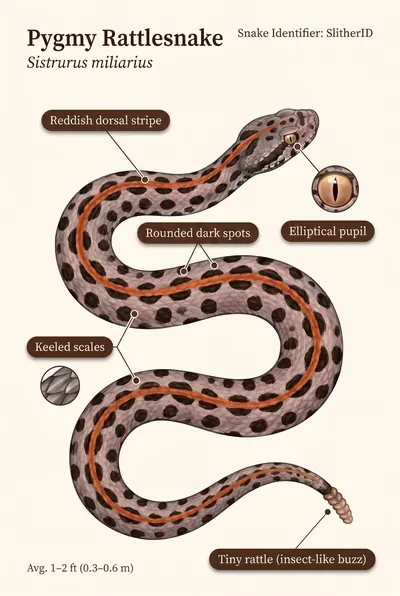 Pygmy RattlesnakeSistrurus miliarius
-
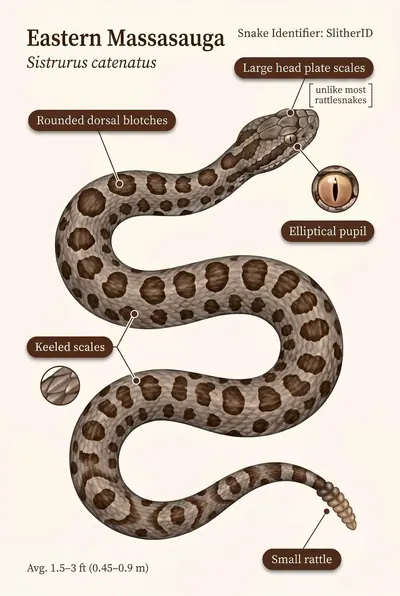 Eastern MassasaugaSistrurus catenatus
-
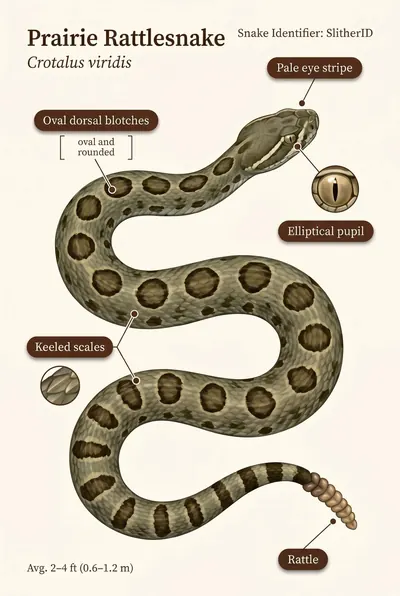 Prairie RattlesnakeCrotalus viridis
All 19 venomous snakes → · Venomous snake identification chart (US) →