
Sidewinder
Crotalus cerastes Rattlesnake (pit viper)
The sidewinder is a small, sand-colored rattlesnake of the southwestern deserts with raised, horn-like scales above each eye. It moves sideways across loose sand, leaving a row of J-shaped tracks.
- Scientific name
- Crotalus cerastes
- Average length
- 1.5 to 2.5 ft (0.45 to 0.75 m)
- Rattle
- Yes
- States
- 4
Last checked:
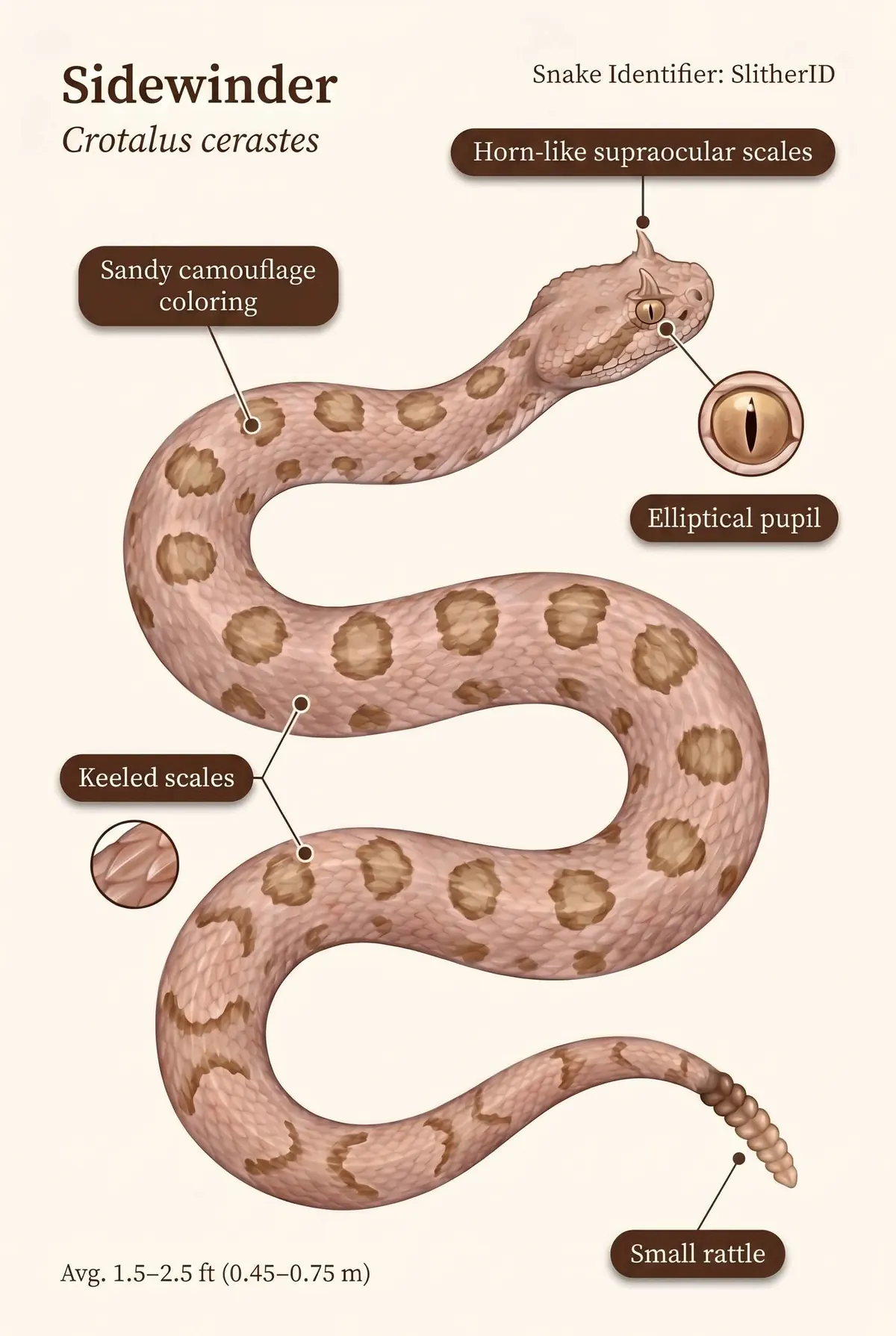
How to recognize a Sidewinder
- Horn-like raised scales above each eye
- Sandy pink, tan or cream color with faint blotches
- Elliptical pupils and heat-sensing pits
- Small rattle
- Usually 1.5 to 2.5 feet long
Where it lives
Mojave and Sonoran deserts of southeastern California, southern Nevada, southwestern Utah and western Arizona.
States: Arizona, California, Nevada, Utah
Habitat
Sand dunes, sandy flats and washes with creosote bush, often buried in the sand under shrubs during the day.
Look-alikes and how to tell them apart
- Speckled rattlesnake: Larger, no horns over the eyes, and a banded tail.
- Desert night snake: No horns, no rattle and a slim body.
Babies and young snakes
Babies are tiny copies of adults and have only a button.
Venom and safety
Bites are painful and need medical care, though its small size usually means less venom than larger rattlesnakes.
SlitherID identifies snakes from a photo and shows if they are venomous. For iPhone.

Questions and answers
Why is it called a sidewinder?
Are sidewinders dangerous?
Other venomous snakes
-
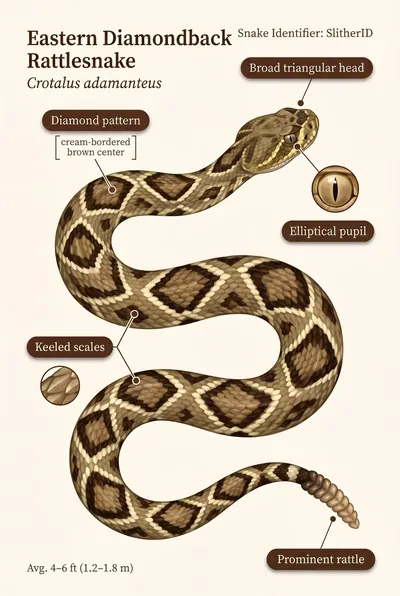 Eastern Diamondback RattlesnakeCrotalus adamanteus
-
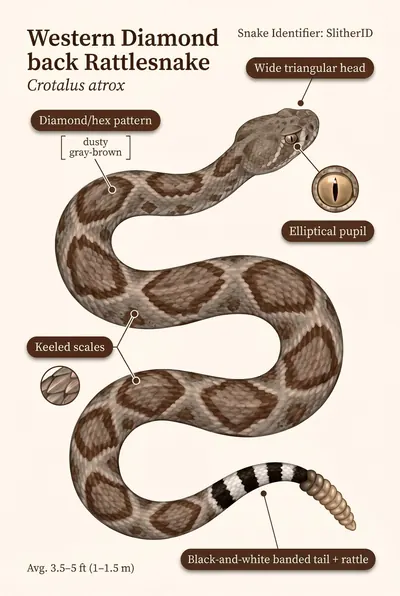 Western Diamondback RattlesnakeCrotalus atrox
-
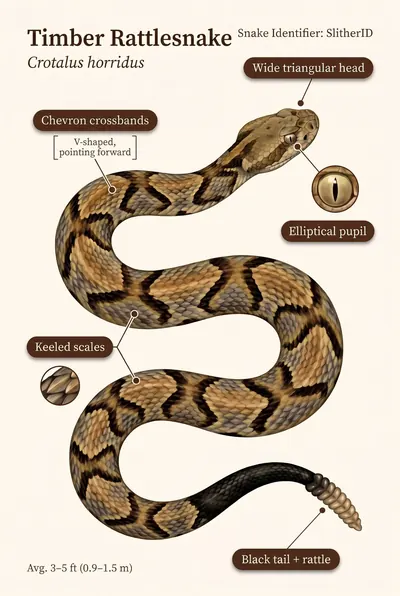 Timber RattlesnakeCrotalus horridus
-
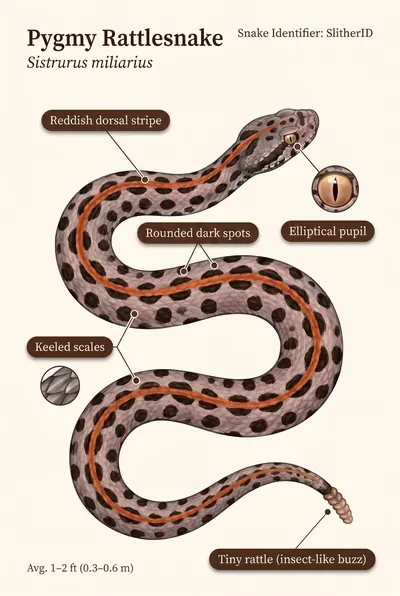 Pygmy RattlesnakeSistrurus miliarius
-
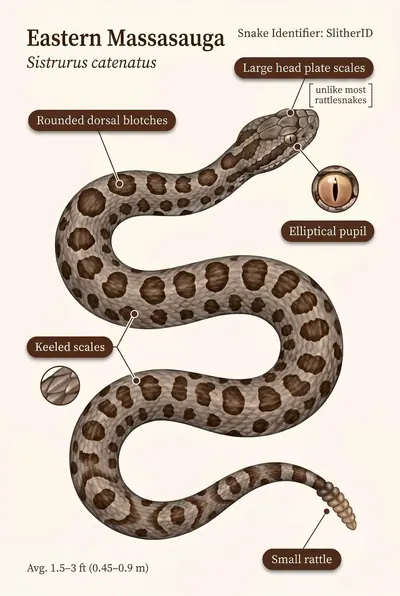 Eastern MassasaugaSistrurus catenatus
-
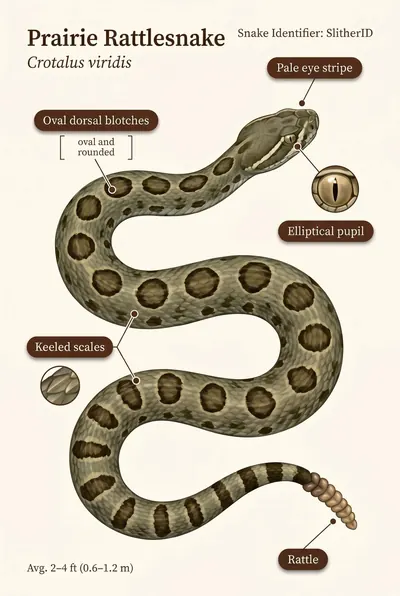 Prairie RattlesnakeCrotalus viridis
All 19 venomous snakes → · Venomous snake identification chart (US) →