
Venomous snakes of the US
Speckled Rattlesnake
Crotalus mitchellii Rattlesnake (pit viper)
Short answer
The speckled rattlesnake is a desert rattlesnake whose color closely matches the rocks where it lives, from white and pink to gray, tan or orange. Each scale is flecked with several colors, giving it a salt-and-pepper look.
- Scientific name
- Crotalus mitchellii
- Average length
- 2 to 4 ft (0.6 to 1.2 m)
- Rattle
- Yes
- States
- 4
Last checked:
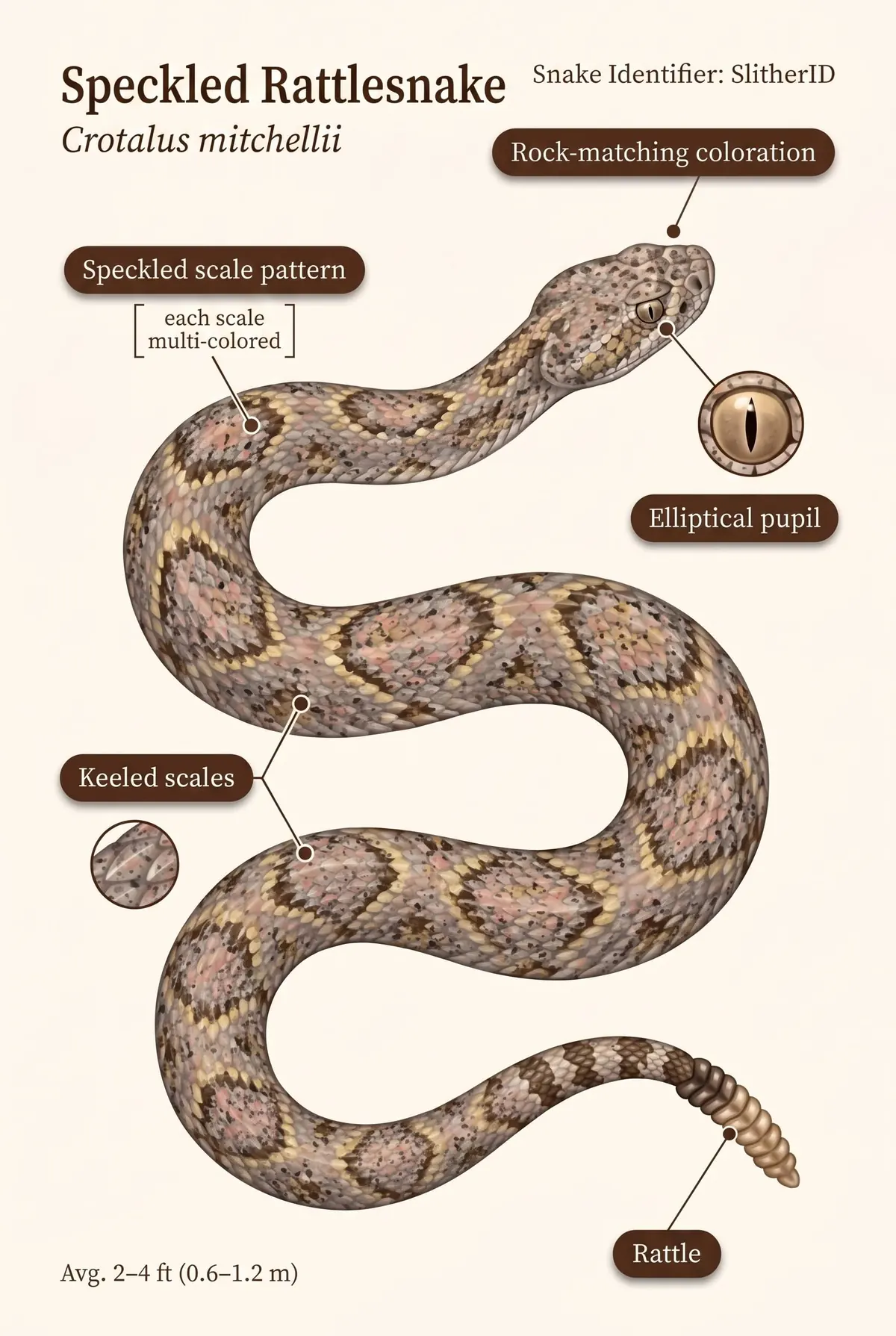
How to recognize a Speckled Rattlesnake
- Speckled scales, each with several colors
- Color matches local rock: white, pink, gray, tan or orange
- Faint bands or blotches and a banded tail
- Elliptical pupils, heat pits and a rattle
- Usually 2 to 4 feet long
Where it lives
Southeastern California, southern Nevada, southwestern Utah and western Arizona.
States: Arizona, California, Nevada, Utah
Habitat
Rocky hillsides, canyons and boulder fields in desert and chaparral.
Look-alikes and how to tell them apart
- Mojave rattlesnake: Crisp diamonds, a greenish tint and wide white tail bands.
- Sidewinder: Smaller, with horn-like scales above the eyes, and lives on sand rather than rock.
Babies and young snakes
Young look like adults and have only a button.
Venom and safety
Bites cause pain, swelling and tissue damage and need emergency care.

SlitherID identifies snakes from a photo and shows if they are venomous. For iPhone.

Questions and answers
What is the scientific name of the speckled rattlesnake?
Crotalus mitchellii. Many herpetologists now place the US populations in Crotalus pyrrhus, the southwestern speckled rattlesnake.
Why is it so hard to see?
Its color and speckles match the rocks where it lives almost exactly.
Other venomous snakes
-
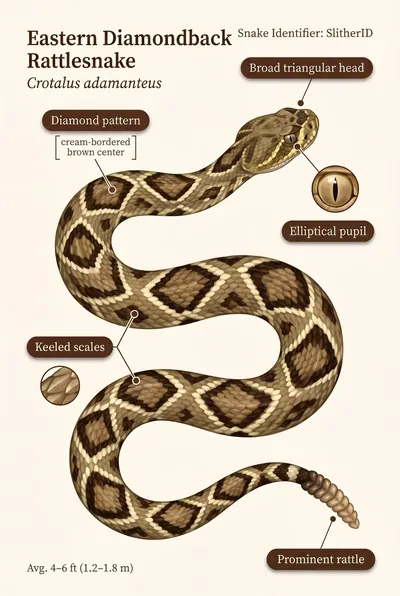 Eastern Diamondback RattlesnakeCrotalus adamanteus
-
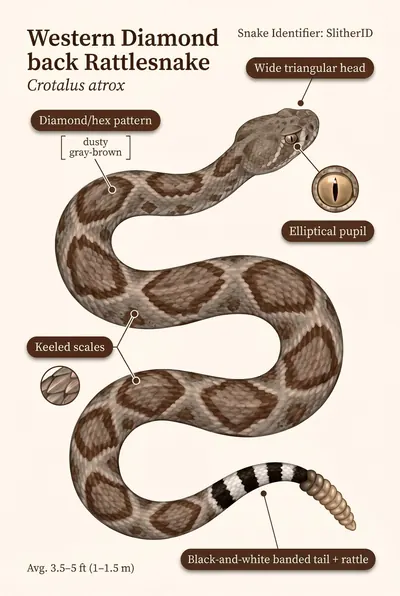 Western Diamondback RattlesnakeCrotalus atrox
-
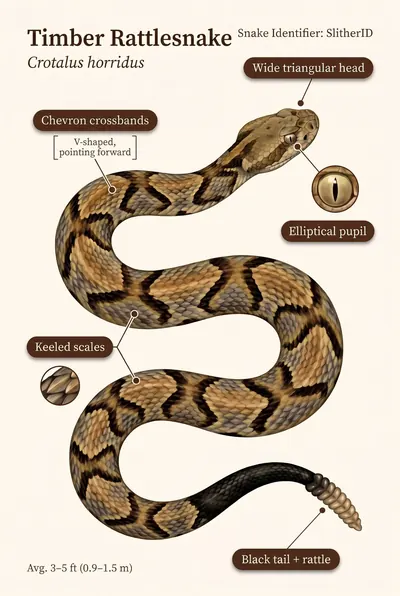 Timber RattlesnakeCrotalus horridus
-
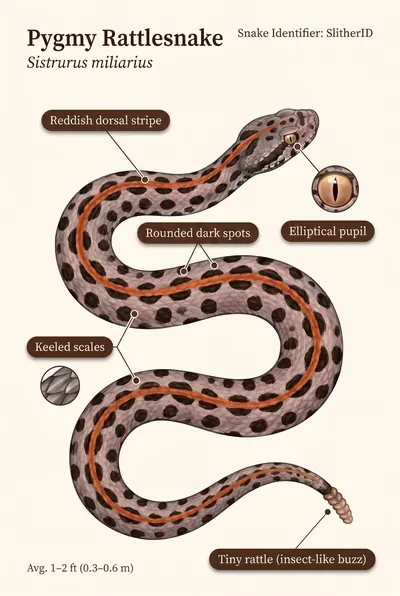 Pygmy RattlesnakeSistrurus miliarius
-
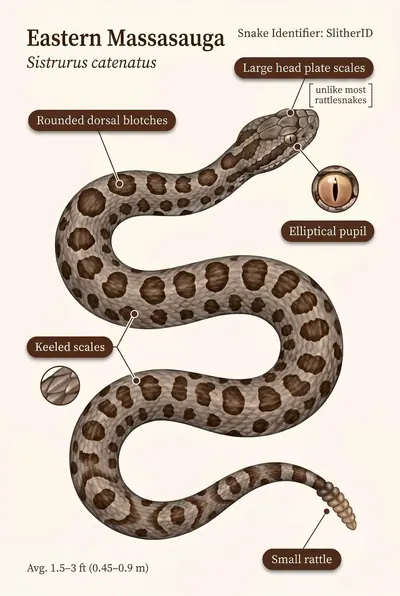 Eastern MassasaugaSistrurus catenatus
-
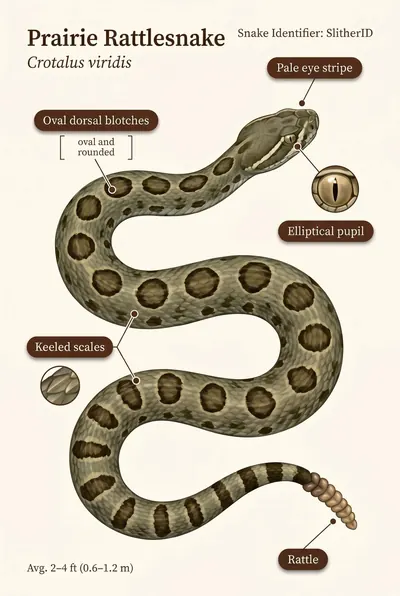 Prairie RattlesnakeCrotalus viridis
All 19 venomous snakes → · Venomous snake identification chart (US) →