
Copperhead
Agkistrodon contortrix Pit viper
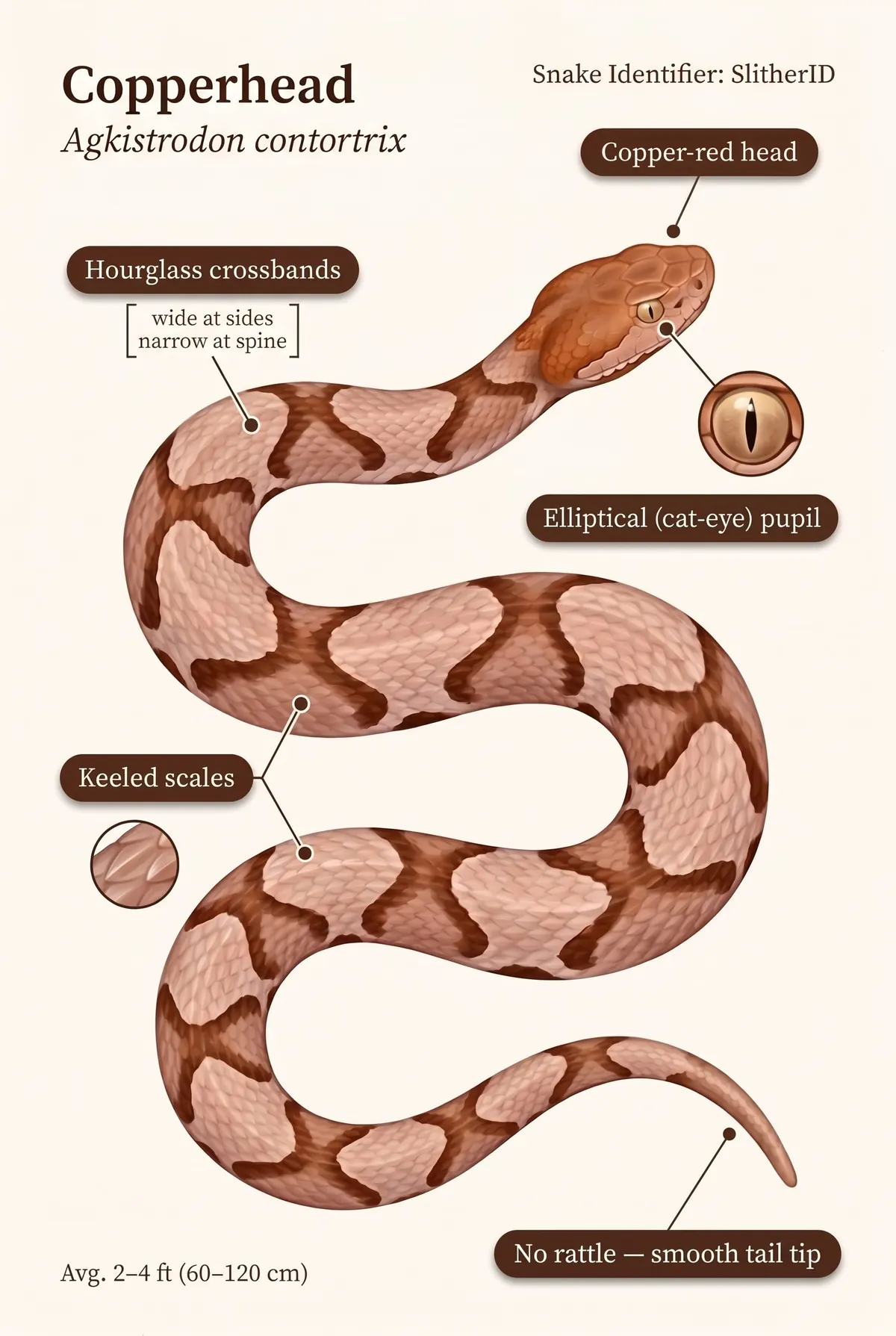
The copperhead is a stout pit viper with a plain copper-red head and tan to pinkish body crossed by darker hourglass-shaped bands: wide on the sides, narrow over the spine. It has no rattle. Copperheads are responsible for many of the venomous snakebites in the eastern and central United States, but bites are rarely fatal with medical care.
- Scientific name
- Agkistrodon contortrix
- Average length
- 2 to 4 ft (0.6 to 1.2 m)
- Rattle
- No
- States
- 28
Last checked:
How to recognize a Copperhead
- Unmarked copper-red to orange head, broad and triangular
- Hourglass crossbands: wide at the sides, narrow at the spine (like a Hershey's Kiss seen from the side)
- Elliptical, cat-eye pupils and a heat-sensing pit between eye and nostril
- Keeled (ridged) scales and a smooth tail tip with no rattle
- Usually 2 to 4 feet long, thick for its length
Where it lives
From southern New England and New York west to Nebraska and Kansas, and south to northern Florida and central Texas.
States: Alabama, Arkansas, Connecticut, Delaware, Florida, Georgia, Illinois, Indiana, Iowa, Kansas, Kentucky, Louisiana, Maryland, Massachusetts, Mississippi, Missouri, Nebraska, New Jersey, New York, North Carolina, Ohio, Oklahoma, Pennsylvania, South Carolina, Tennessee, Texas, Virginia, West Virginia
Habitat
Wooded hillsides, rocky outcrops, leaf litter, woodpiles, stone walls and the edges of suburban yards. Its pattern blends into dead leaves, so people often step close before seeing it.
Look-alikes and how to tell them apart
- Eastern milk snake: Blotches are wide over the spine and narrow at the sides (the reverse of a copperhead), outlined in black, with round pupils.
- Corn snake: Orange or red blotches edged in black, a black-and-white checkered belly, a slim head and round pupils.
- Northern water snake: Dark bands that turn into blotches along the body, round pupils, and usually found in or near water.
- Young eastern rat snake: Gray with dark blotches, a slim head, round pupils and a long, thin tail.
Babies and young snakes
Baby copperheads look like small adults but have a bright yellow or green tail tip, which they wiggle to lure prey. They are venomous from birth.
Venom and safety
Copperhead venom damages tissue and causes pain and swelling. Bites are rarely life-threatening, but every bite needs medical care. Most bites happen when someone steps on or reaches near a snake they did not see.
Seen by SlitherID users
Recent photos of this species shared by SlitherID users in the US. Identified by AI (an estimate); each photo was reviewed by our team before it was published.
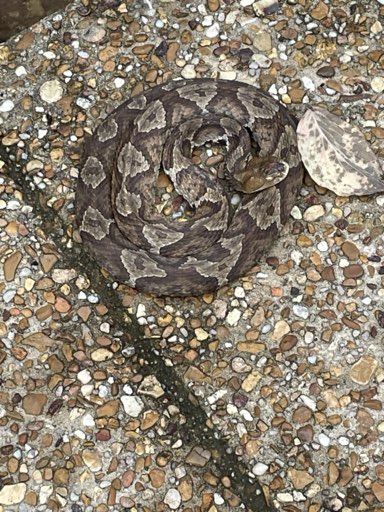 Tennessee
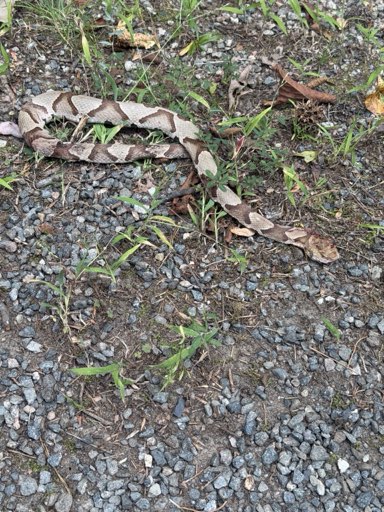 Virginia
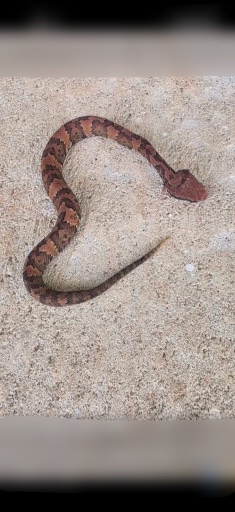 Georgia
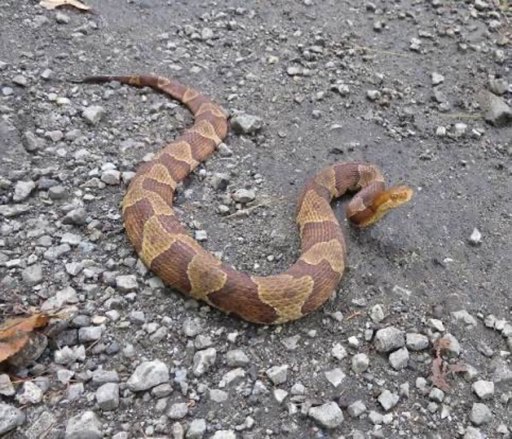 Tennessee
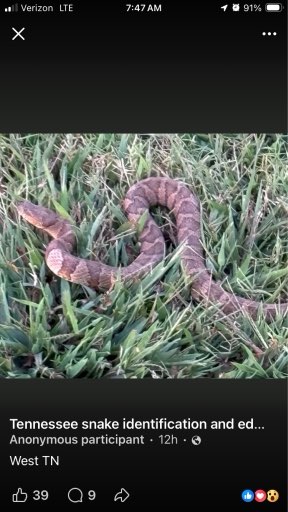 Tennessee
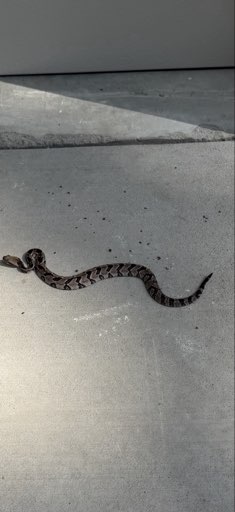 South Carolina
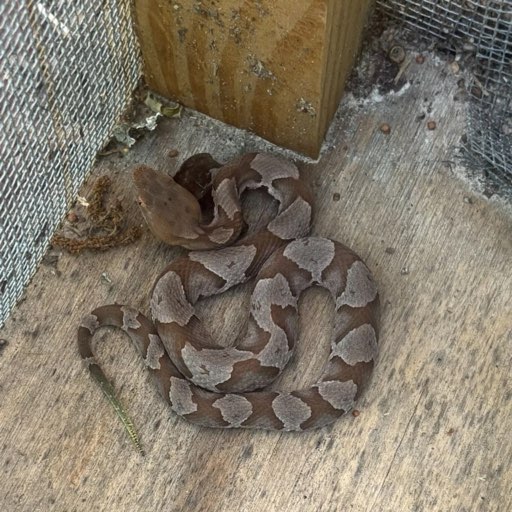 Oklahoma
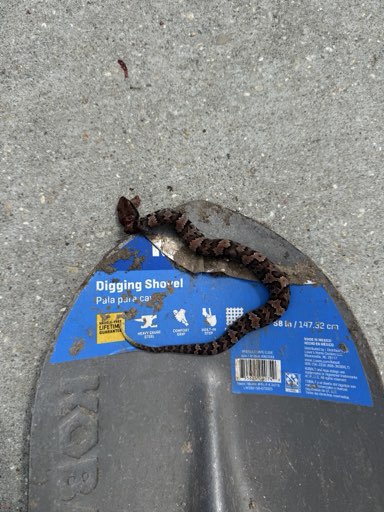 Louisiana

SlitherID identifies snakes from a photo and shows if they are venomous. For iPhone.

Questions and answers
Is a copperhead deadly?
How can I tell a copperhead from a harmless snake?
Do copperheads rattle?
Other venomous snakes
-
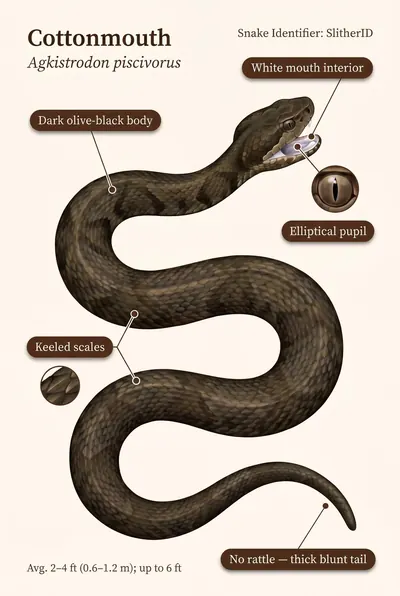 Cottonmouth (water moccasin)Agkistrodon piscivorus
-
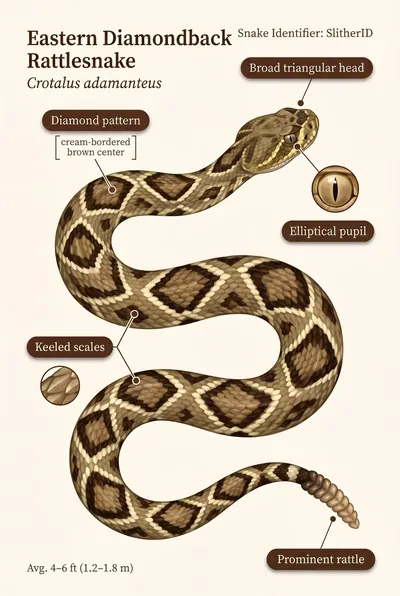 Eastern Diamondback RattlesnakeCrotalus adamanteus
-
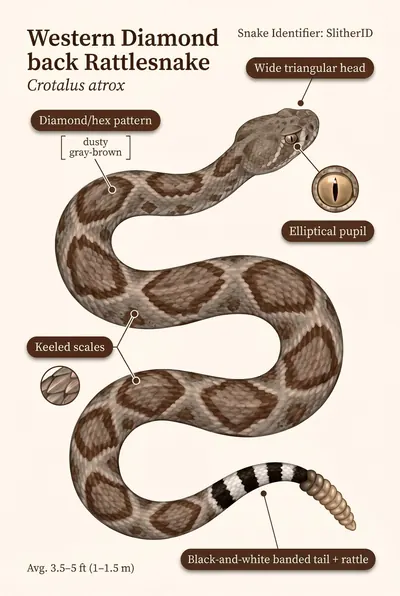 Western Diamondback RattlesnakeCrotalus atrox
-
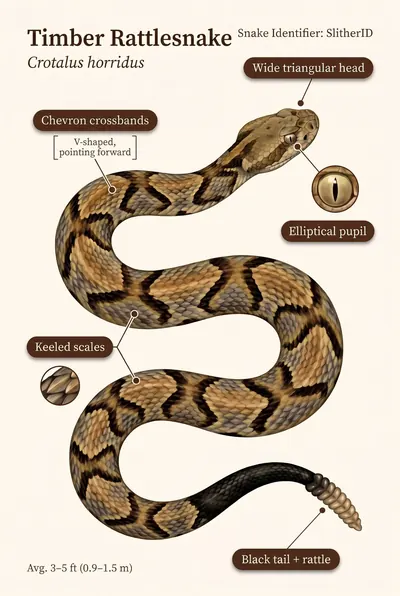 Timber RattlesnakeCrotalus horridus
-
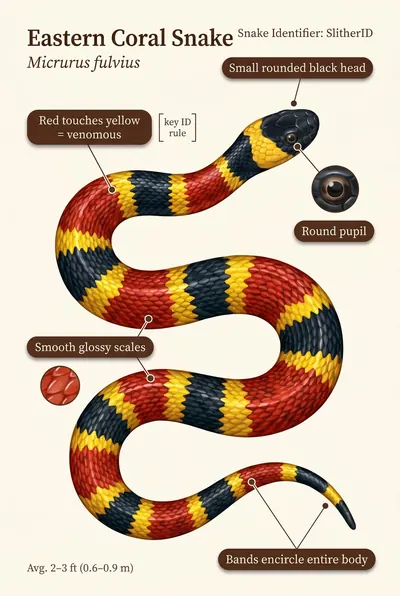 Eastern Coral SnakeMicrurus fulvius
-
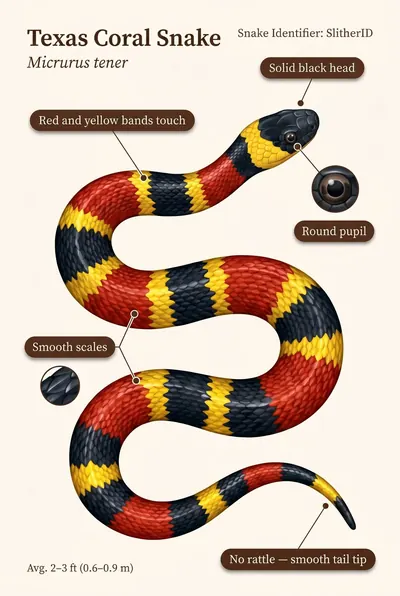 Texas Coral SnakeMicrurus tener
All 19 venomous snakes → · Venomous snake identification chart (US) →