
Texas Coral Snake
Micrurus tener Coral snake (elapid)
The Texas coral snake looks very similar to the eastern coral snake: smooth, glossy red, yellow and black bands circling the body, red touching yellow, and a solid black head. It lives in Texas and nearby parts of Louisiana and Arkansas.
- Scientific name
- Micrurus tener
- Average length
- 2 to 3 ft (0.6 to 0.9 m)
- Rattle
- No
- States
- 3
Last checked:
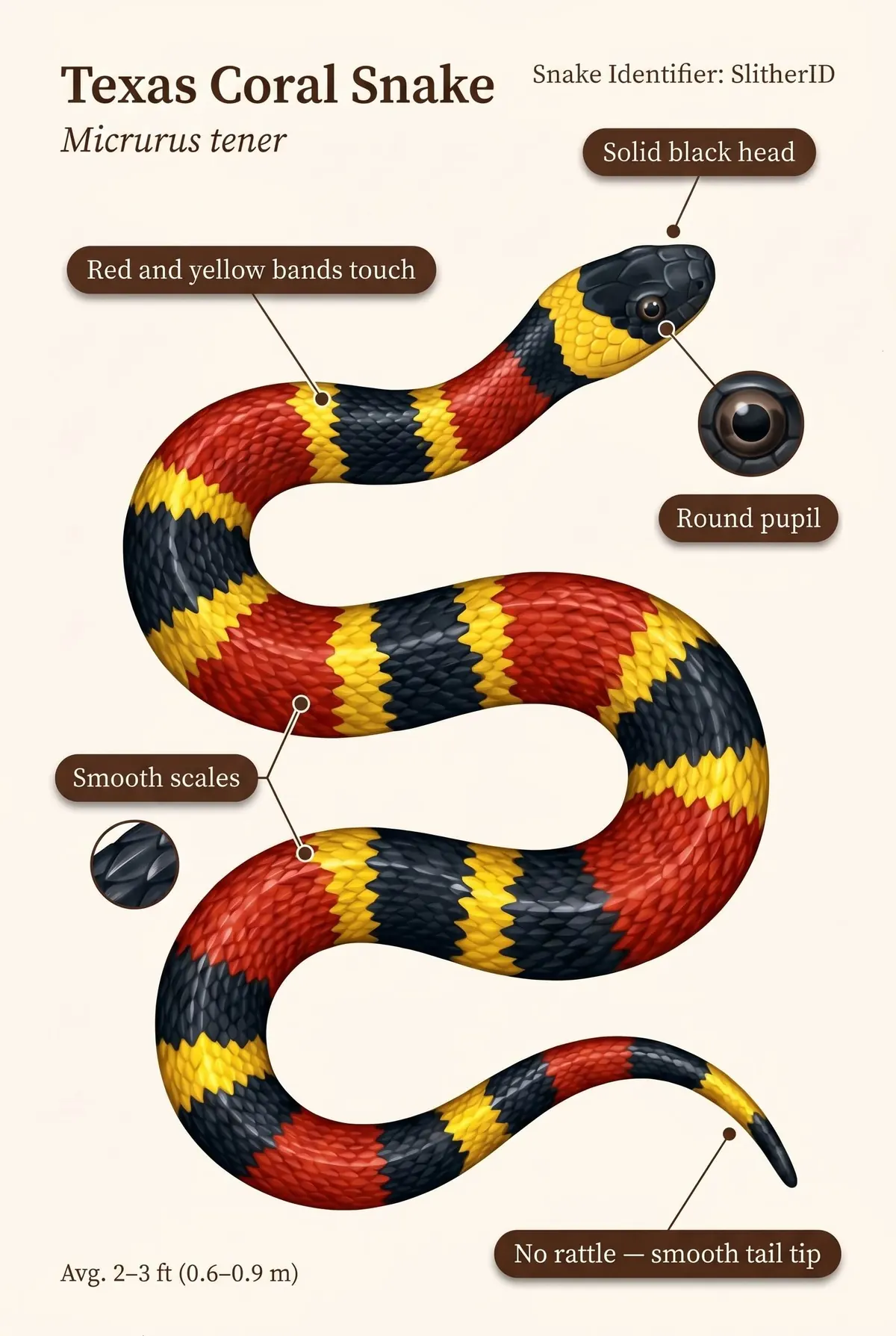
How to recognize a Texas Coral Snake
- Red and yellow bands touch each other
- Bands circle the entire body, including the belly
- Solid black head and snout with a yellow band behind it
- Round pupils, smooth scales, no rattle and no heat pits
- Usually 2 to 3 feet long and slender
Where it lives
Much of central, southern and eastern Texas, plus western Louisiana and a small area of southwestern Arkansas.
States: Arkansas, Louisiana, Texas
Habitat
Woodlands, brushland, rocky hillsides, coastal prairies and suburban yards, usually hidden under leaf litter, rocks or logs.
Look-alikes and how to tell them apart
- Mexican and Louisiana milk snakes: Red touches black, the snout is often light or red, and the bands may not cross the belly.
- Texas long-nosed snake: Speckled blotches rather than clean bands, a long pointed snout and bands that do not fully circle the body.
Babies and young snakes
Hatchlings look like small adults and are venomous from birth.
Venom and safety
Its venom attacks the nervous system and symptoms may appear hours after a bite. Get emergency care immediately after any bite.

SlitherID identifies snakes from a photo and shows if they are venomous. For iPhone.

Questions and answers
Where do Texas coral snakes live?
Is the Texas coral snake the same as the eastern coral snake?
Other venomous snakes
-
 CopperheadAgkistrodon contortrix
-
 Cottonmouth (water moccasin)Agkistrodon piscivorus
-
 Eastern Diamondback RattlesnakeCrotalus adamanteus
-
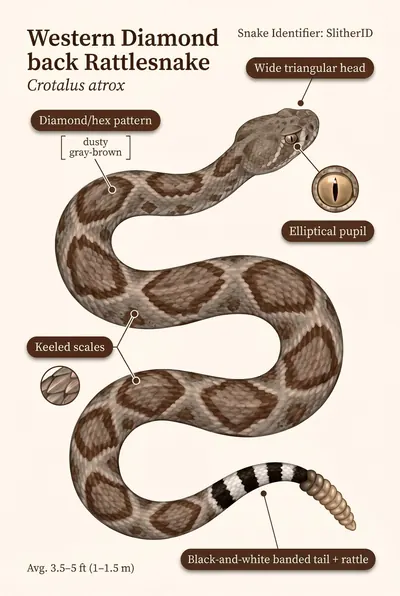 Western Diamondback RattlesnakeCrotalus atrox
-
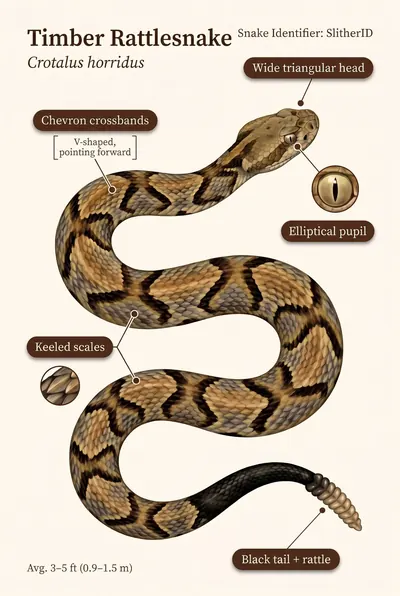 Timber RattlesnakeCrotalus horridus
-
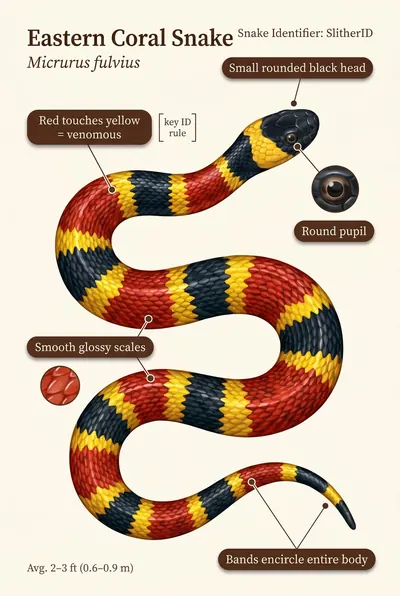 Eastern Coral SnakeMicrurus fulvius
All 19 venomous snakes → · Venomous snake identification chart (US) →